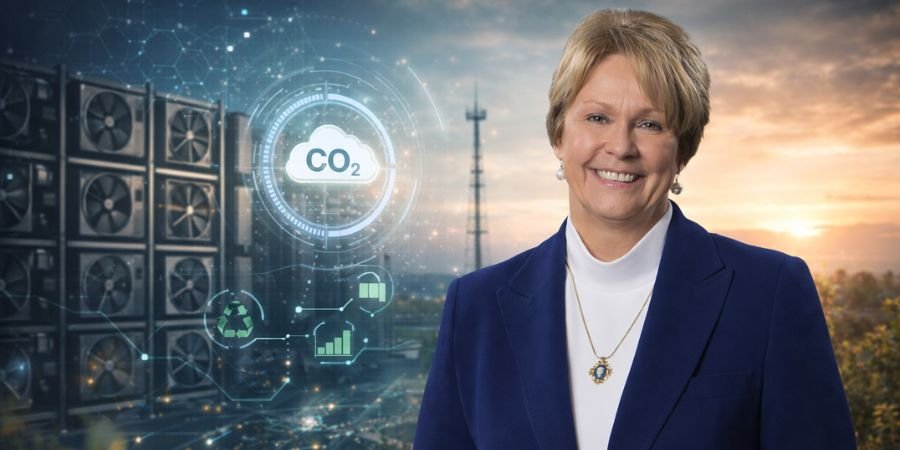
Vicki Hollub, CEO of Occidental Petroleum, is trending globally after announcing a significant update to the company’s Direct Air Capture (DAC) initiative. The company has secured 10 new Fortune 500 partners committed to purchasing carbon removal credits, marking a major milestone in its transition toward a carbon management-focused business model.
The announcement highlights a growing corporate demand for scalable carbon removal solutions and positions Occidental at the forefront of the emerging carbon management economy.
Major Boost for Direct Air Capture Adoption
The latest update on Occidental’s DAC plant underscores increasing confidence in large-scale carbon removal technologies. Under Vicki Hollub’s leadership, the company has actively expanded its carbon capture infrastructure, aiming to commercialize DAC as a viable climate solution.
By onboarding 10 Fortune 500 companies, Occidental has effectively created a strong demand pipeline for its carbon credits. These agreements signal that major corporations are willing to invest in long-term decarbonization strategies, particularly those that go beyond emissions reduction to include carbon removal.
Why Vicki Hollub Is Trending Today
Search interest in Vicki Hollub surged on March 18 as investors, analysts, and sustainability advocates reacted to the announcement. The development is being viewed as a turning point in how traditional oil and gas companies can evolve within a low-carbon economy.
Hollub’s strategy of integrating DAC technology into Occidental’s core business model has drawn attention from green-tech investors, who see the company as a rare example of an energy giant successfully pivoting toward climate-focused innovation.
The deal also reflects broader market momentum, where corporations increasingly seek carbon removal credits to meet net-zero targets and regulatory expectations.
Transforming an Oil Giant Into a Climate Tech Leader
Under Vicki Hollub, Occidental Petroleum has repositioned itself as a leader in carbon capture and storage (CCS) and DAC technologies. This strategic shift is notable in an industry traditionally associated with fossil fuel production.
The company’s approach combines existing expertise in subsurface engineering with new investments in climate technology. By doing so, Occidental is not only reducing its own carbon footprint but also creating a new revenue stream through carbon credit markets.
What This Means for the Carbon Market
The addition of 10 Fortune 500 partners could accelerate the commercialization of DAC technologies globally. It also reinforces confidence in carbon removal credits as a legitimate tool for corporate climate strategies.
For investors, the development signals that DAC is moving beyond experimental stages into scalable, revenue-generating operations. For policymakers and climate advocates, it demonstrates how private-sector leadership can complement global climate goals.
As Vicki Hollub continues to expand Occidental’s DAC footprint and secure long-term partnerships, industry observers will be closely watching whether this momentum can translate into widespread adoption—and potentially reshape the future of the global energy and carbon markets.
Also Read: Jane Fraser Issues “Bar Is Raised” Warning Amid Citi Job Cuts