A weak core rarely announces itself loudly at first. It shows up quietly through back discomfort after long workdays, poor posture during video calls, balance issues during workouts, or the constant feeling that the body tires faster than it should. Fitness trends may come and go every year, but core exercises continue to dominate training programs because they affect nearly every movement the body makes. From walking upstairs to lifting groceries, running, dancing, and even sitting properly, the core acts like the body’s central support system. More women are now prioritizing core strengthening exercises not just for aesthetics but for stability, confidence, mobility, and long-term health. In 2026, the conversation around fitness has shifted away from chasing quick results and toward building a stronger body that actually performs better in real life.
What Makes Core Exercises So Important?
Many people think the core only refers to visible abdominal muscles. In reality, the core includes a much larger group of muscles that stabilize the spine, pelvis, and torso. These muscles work together to support balance, movement, posture, and strength.
Core training exercises target:
- Rectus abdominis
- Obliques
- Transverse abdominis
- Lower back muscles
- Pelvic floor muscles
- Hip stabilizers
- Glutes
A strong core helps the body move more efficiently. It reduces stress on the joints, improves athletic performance, and helps prevent injuries during everyday activities and workouts.
Women especially benefit from core strengthening exercises because hormonal changes, pregnancy, prolonged sitting, and lifestyle habits can weaken the midsection over time. Training the core consistently helps improve body mechanics and creates a stronger foundation for every type of movement.
The Biggest Benefits of Core Exercises for Women
Better Posture Throughout the Day
Hours spent working on laptops and phones often create rounded shoulders and lower back strain. Core exercises for women strengthen the muscles responsible for spinal alignment. Over time, standing and sitting upright begins to feel natural instead of forced.
Reduced Lower Back Pain
A weak core places unnecessary pressure on the lower back. One of the main reasons physical therapists recommend core training exercises is because they help distribute force evenly through the body. Strong abdominal and back muscles create more support for the spine.
Improved Balance and Stability
Whether someone enjoys yoga, strength training, running, or simply staying active, stability matters. Core strengthening exercises improve coordination and balance, making movement safer and more controlled.
Enhanced Athletic Performance
Almost every athletic movement starts from the core. Twisting, lifting, sprinting, jumping, and pushing all require core engagement. A stronger midsection helps transfer energy efficiently during exercise.
Increased Confidence
Fitness is not only physical. Feeling stronger changes how people move, stand, and carry themselves. Consistent core exercise routines often create noticeable confidence because the body feels more capable and supported.
How Often Should You Do Core Exercises?
One of the biggest misconceptions about core training exercises is that they must be done daily for results. In reality, quality matters far more than quantity.
For most women, training the core 3–4 times per week is enough to see improvements. Sessions can range from 10 to 25 minutes depending on fitness level and goals.
A balanced weekly routine may include:
- Stability-focused exercises
- Rotational movements
- Strength-based core exercises
- Mobility work
- Recovery and stretching
Allowing muscles time to recover is important because the core works during many other exercises too.
Best Core Exercises for Women in 2026
The most effective core exercises are not always the flashiest. Simple, controlled movements often produce the best long-term results because they train stability and muscle engagement properly.
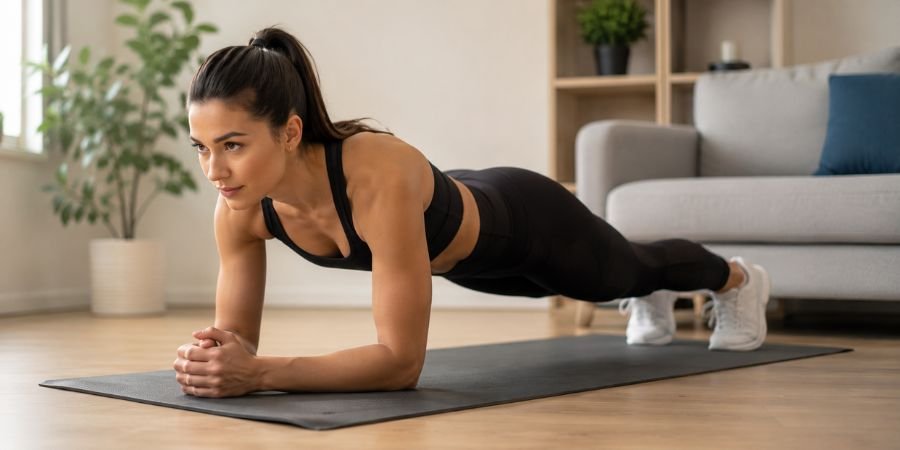
Plank
The plank remains one of the most effective core strengthening exercises because it trains multiple muscle groups simultaneously.
How to Perform It
- Start in a forearm position
- Keep elbows under shoulders
- Tighten the abdominal muscles
- Maintain a straight body line
- Hold while breathing steadily
Why It Works
Planks strengthen the entire core without placing excessive pressure on the spine. They also improve endurance and posture.
Beginner Tip
Start with 20 seconds and gradually increase duration over time.
Dead Bug
The dead bug exercise looks simple, but it is excellent for improving coordination and spinal stability.
Steps
- Lie on your back
- Raise arms toward the ceiling
- Bend knees at 90 degrees
- Slowly lower opposite arm and leg
- Return and repeat on the other side
This core exercise helps train deep stabilizing muscles while protecting the lower back.
Russian Twists
Russian twists target the obliques and rotational strength.
How to Do It
- Sit on the floor with knees bent
- Lean back slightly
- Rotate the torso side to side
- Keep movements controlled
Women looking to improve waist strength and rotational movement often include this in core training exercises.
Bird Dog
Bird dog exercises are widely used in rehabilitation and functional training.
Benefits
- Improves balance
- Strengthens lower back muscles
- Enhances coordination
- Supports spinal stability
Instructions
- Start on hands and knees
- Extend opposite arm and leg
- Pause briefly
- Return slowly
- Switch sides
Bicycle Crunches
Bicycle crunches engage both the upper abs and obliques.
Key Technique
The goal is not speed. Slow and controlled repetitions create far better muscle activation.
Glute Bridge
Many people forget that glutes are an important part of the core system.
Why Women Love This Exercise
- Strengthens hips and glutes
- Improves pelvic stability
- Supports lower back health
- Helps posture
Steps
- Lie on the floor with knees bent
- Press feet into the ground
- Lift hips upward
- Squeeze glutes at the top
- Lower slowly
Mountain Climbers
Mountain climbers combine cardio and core strengthening exercises into one movement.
This exercise helps:
- Increase heart rate
- Burn calories
- Improve coordination
- Build endurance
Side Plank
The side plank focuses heavily on the obliques and stabilizers.
Common Mistake
Allowing hips to drop reduces effectiveness. Maintaining alignment is essential.
Hollow Hold
This advanced core exercise develops deep abdominal strength.
How It Helps
Gymnasts and athletes frequently use hollow holds because they create total-body tension and improve core control.
Leg Raises
Leg raises target the lower abdominal muscles.
Controlled movement is critical here. Swinging the legs reduces tension on the core.
Beginner-Friendly Core Training Exercises
Starting a new fitness routine can feel intimidating, especially when social media showcases advanced workouts. The truth is that beginner-friendly core exercises often create the strongest foundation.
Simple Starter Routine
Perform each exercise for 30 seconds:
- Modified plank
- Glute bridge
- Bird dog
- Dead bug
- Standing knee raises
Repeat the circuit 2–3 times.
This approach builds endurance gradually without overwhelming the body.
Advanced Core Strengthening Exercises
Once foundational strength improves, more challenging movements can increase intensity.
Hanging Knee Raises
This exercise develops lower abdominal strength while improving grip and shoulder stability.
Stability Ball Rollouts
Rollouts challenge the deep core muscles significantly because the body must resist extension.
Weighted Russian Twists
Adding resistance increases muscle engagement and rotational strength.
Renegade Rows
This movement combines upper body training with core stabilization.
Common Mistakes During Core Exercises
Even effective workouts can become less beneficial when technique is poor.
Pulling the Neck During Crunches
The neck should remain relaxed. The abdominal muscles should create the movement.
Holding the Breath
Proper breathing improves muscle engagement and prevents unnecessary tension.
Rushing Through Repetitions
Slow and controlled movements activate the core more effectively.
Training Only the Front Abs
A balanced routine should include the sides, lower back, glutes, and deep stabilizers.
Ignoring Recovery
Muscles need recovery time to grow stronger. Overtraining can lead to fatigue and discomfort.
Core Exercises and Weight Loss
Many people begin core training exercises hoping to reduce belly fat. While core exercises strengthen and define muscles, fat loss depends on overall calorie balance, nutrition, and consistent activity.
That said, strong core muscles improve workout performance, which can support fat-loss goals indirectly.
Combining core exercise routines with:
- Strength training
- Cardio
- Protein-rich nutrition
- Quality sleep
- Hydration
creates better long-term results.
How Nutrition Supports Core Strength
Exercise alone cannot maximize results without proper nutrition.
Protein for Muscle Recovery
Protein supports muscle repair after core strengthening exercises.
Hydration Matters
Dehydration affects muscle performance and recovery.
Balanced Meals Improve Energy
Complex carbohydrates and healthy fats provide sustained workout energy.
Best Time to Do Core Exercises
There is no universal perfect time for core exercise routines.
Morning Workouts
Morning sessions can improve focus and posture for the day ahead.
Post-Strength Training
Some women prefer training the core after weightlifting to avoid fatigue during compound movements.
Short Evening Sessions
Light core training exercises in the evening may help reduce stiffness after sitting all day.
Consistency matters more than timing.
Core Exercises During Pregnancy and Postpartum
Many women safely perform modified core strengthening exercises during and after pregnancy, though medical guidance is always important.
Helpful Pregnancy-Friendly Movements
- Bird dog
- Pelvic tilts
- Side planks
- Breathing exercises
- Glute bridges
Postpartum recovery should focus on rebuilding deep core stability gradually.
Equipment That Can Improve Core Training Exercises
Bodyweight exercises are highly effective, but some tools add variety and challenge.
Resistance Bands
Bands create tension without excessive joint stress.
Stability Balls
These increase instability, forcing the core to work harder.
Dumbbells
Weighted movements improve strength progression.
Yoga Mats
Comfort and grip improve workout quality.
How Core Exercises Improve Everyday Life
The impact of a strong core extends far beyond the gym.
Easier Daily Movement
Simple actions like bending, lifting, climbing stairs, and carrying bags feel smoother.
Better Walking Mechanics
Core strength improves posture and movement efficiency.
Reduced Injury Risk
A stable body handles stress better during both workouts and daily activity.
Improved Confidence in Physical Activities
Women often notice greater confidence during sports, fitness classes, hiking, dancing, and recreational activities.
Building a Sustainable Core Exercise Routine
Consistency beats intensity when building lasting results.
Start Small
Ten focused minutes can be more effective than inconsistent hour-long workouts.
Track Progress
Holding a plank longer or improving balance are meaningful milestones.
Focus on Technique
Perfect repetitions matter more than high repetition counts.
Increase Difficulty Gradually
Progressive overload helps muscles continue adapting.
Sample Weekly Core Training Plan
Monday – Stability Focus
- Planks
- Bird dogs
- Dead bugs
Wednesday – Strength Focus
- Russian twists
- Leg raises
- Glute bridges
Friday – Endurance Focus
- Mountain climbers
- Side planks
- Bicycle crunches
Sunday – Recovery & Mobility
- Stretching
- Gentle yoga
- Breathing exercises
Why Core Exercises Are Trending More in 2026
Fitness culture has evolved significantly. Instead of chasing unrealistic body standards, more women are prioritizing strength, movement quality, and longevity.
Social media trends in 2026 increasingly highlight:
- Functional fitness
- Mobility training
- Injury prevention
- Sustainable wellness
- Strength over appearance
Core strengthening exercises fit perfectly into this shift because they improve both performance and everyday quality of life.
Mental Benefits of Core Training Exercises
Physical fitness and mental wellness are deeply connected.
Stress Relief
Exercise helps reduce stress hormones while improving mood.
Better Body Awareness
Core training exercises encourage mindful movement and posture awareness.
Increased Discipline
Following a routine consistently builds confidence and self-trust.
The Truth About Visible Abs
One of the biggest misconceptions around core exercises is the belief that endless crunches automatically create visible abs.
Visible abdominal definition depends on several factors:
- Body fat percentage
- Genetics
- Nutrition
- Hormones
- Overall training routine
Strong core muscles can exist without extreme definition. Functional strength should always matter more than appearance alone.
Best Core Exercises for Women at Home
Gym access is not necessary for effective workouts.
Home-Friendly Core Routine
Perform 3 rounds:
- 30-second plank
- 15 glute bridges
- 20 bicycle crunches
- 10 bird dogs each side
- 20 mountain climbers
Minimal space and no equipment are required.
Core Strength and Aging
Maintaining muscle strength becomes increasingly important with age.
Core strengthening exercises support:
- Joint health
- Balance
- Mobility
- Independence
- Bone support
Women who stay physically active often maintain better movement quality later in life.
How Long Does It Take to See Results?
Results depend on consistency, fitness level, nutrition, and workout intensity.
Many women notice:
- Improved posture within weeks
- Better balance quickly
- Increased endurance after regular training
- Visible muscle definition over time
The most important changes are often how the body feels rather than how it looks.
Motivation Tips for Staying Consistent
Even the best fitness plans fail without consistency.
Keep Workouts Short Initially
Short sessions reduce mental resistance.
Create a Dedicated Workout Space
A consistent environment supports habit formation.
Use Progress Photos or Notes
Tracking changes can improve motivation.
Focus on Strength Goals
Performance-based goals feel more sustainable than appearance-based goals.
Frequently Asked Questions
Why are core exercises important for women?
Core exercises for women improve posture, balance, strength, and stability while helping reduce lower back discomfort and injury risk.
How often should I do core strengthening exercises?
Most women benefit from performing core strengthening exercises around 3–4 times weekly with adequate recovery between sessions.
Can core exercises reduce belly fat?
Core exercise routines strengthen muscles, but fat loss depends on overall nutrition, activity level, and calorie balance.
What are the best beginner core training exercises?
Planks, bird dogs, dead bugs, glute bridges, and modified crunches are excellent beginner-friendly core training exercises.
When is the best time to do core exercises?
The best time is whenever consistency feels easiest. Some women prefer mornings, while others enjoy adding core exercise sessions after strength workouts.
Conclusion
A stronger core changes far more than physical appearance. It improves posture during long workdays, creates better balance during movement, supports the spine, and builds confidence in everyday life. The growing popularity of core exercises in 2026 reflects a bigger shift toward sustainable fitness and functional strength rather than temporary trends. Whether someone is beginning their first workout routine or looking to elevate athletic performance, consistent core training exercises can create noticeable improvements across the entire body. Starting with simple movements and focusing on quality over intensity often produces the best long-term results. A few dedicated sessions each week can gradually build the kind of strength that supports movement, energy, and confidence for years ahead.
Also Read: Why Lexapro (Escitalopram) Side Effects Matter: Truth Behind 2026 Use