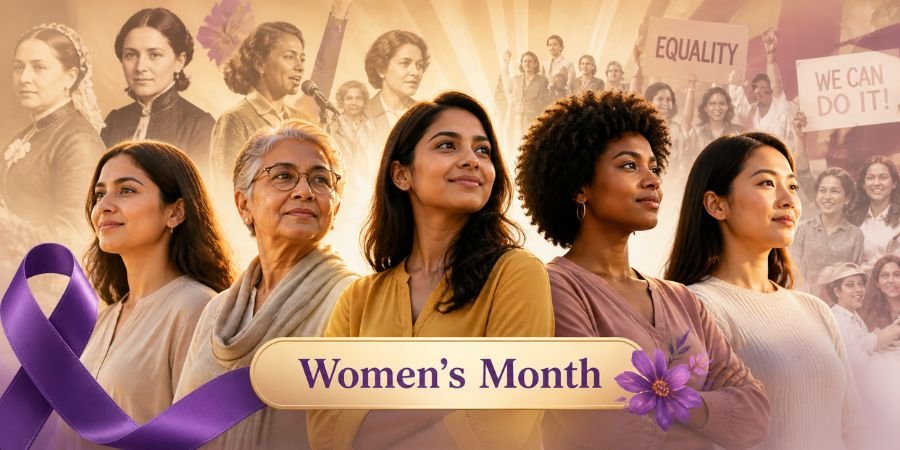
A classroom wall covered with photographs of scientists, activists, athletes, artists, and political leaders can quietly change the way a child sees the world. Many people grow up hearing famous names from history books while countless influential women remain overlooked. That gap is exactly why Women’s History Month continues to matter in 2026. More than a symbolic celebration, it has become a global reminder that women have shaped every part of society for centuries, even when their contributions were ignored, erased, or minimized. Across schools, workplaces, media platforms, and communities, women’s month now sparks conversations about equality, leadership, opportunity, and representation in ways that feel more relevant than ever before.
What Is Women’s History Month?
Women’s History Month is an annual celebration dedicated to recognizing the achievements, struggles, influence, and contributions of women throughout history. Observed every March in many countries, the month highlights women who changed society through science, politics, education, literature, business, activism, medicine, sports, and countless other fields.
The purpose of women history month is not simply to celebrate famous figures. It also shines a light on ordinary women whose work transformed families, communities, and industries behind the scenes. From social reformers and innovators to teachers and caregivers, Women’s History Month honors the role women have played in building modern society.
In 2026, women’s month continues to grow beyond traditional celebrations. Businesses launch campaigns focused on inclusion, schools introduce educational programs, organizations host leadership events, and social media becomes filled with stories of women breaking barriers around the world.
Why Women’s History Month Still Matters in 2026
Some people ask why Women’s History Month is still necessary today. After all, women now lead governments, global companies, universities, and major organizations. While progress is undeniable, equality is still uneven across many parts of the world.
Women continue to face challenges related to:
- Wage gaps
- Workplace discrimination
- Underrepresentation in leadership
- Gender-based violence
- Limited educational opportunities in some regions
- Unequal healthcare access
- Bias in politics and media
Women’s month creates space for these issues to be discussed openly while also celebrating progress. It balances recognition with reflection. The month encourages people not only to admire achievements but also to understand the systems that made those achievements harder for women to reach.
In 2026, conversations surrounding women history month are becoming more intersectional as well. People are paying closer attention to how race, culture, disability, class, and geography affect women’s experiences differently across the globe.
The History Behind Women’s History Month
Understanding what is Women’s History Month becomes easier when you know where it started. The movement traces its roots back to labor activism and women’s rights campaigns in the early twentieth century.
The Early Beginnings
The origins of women’s month are closely connected to International Women’s Day, first observed in the early 1900s. Women across Europe and North America protested for better working conditions, voting rights, fair wages, and political representation.
By the 1970s, educators and activists in the United States began pushing for a formal recognition of women’s contributions to history. Schools often focused heavily on male historical figures, leaving women underrepresented in educational materials.
From a Week to a Full Month
Initially, Women’s History Week was celebrated in March. The movement gained momentum quickly as communities recognized the importance of inclusive historical education.
In 1987, the United States officially expanded the observance into Women’s History Month. Since then, many countries, organizations, and institutions worldwide have embraced similar celebrations and educational initiatives.
Today, women history month has evolved into an international cultural movement that extends beyond textbooks and classrooms.
Why March Is Known as Women’s Month
Many people search for answers about why March is associated with women’s month. The reason connects directly to International Women’s Day, celebrated globally on March 8 every year.
March became the natural choice for Women’s History Month because the month already carried historical significance for women’s rights activism. Over time, the entire month transformed into a broader celebration and educational opportunity.
Throughout March, organizations often host:
- Leadership conferences
- Awareness campaigns
- Charity drives
- Educational workshops
- Community events
- Business networking sessions
- School competitions
- Social media initiatives
This concentrated attention helps keep conversations about gender equality active in mainstream culture.
The Real Purpose of Women History Month
At its core, women history month exists to correct historical imbalance. For generations, many achievements by women were excluded from official records, school curricula, and public recognition.
The month serves several important purposes:
1. Education
Many people discover overlooked historical figures during Women’s History Month. Students learn about women pioneers who changed medicine, engineering, literature, law, and social justice movements.
2. Inspiration
Seeing successful women represented in history can inspire future generations to pursue leadership roles and ambitious goals.
3. Recognition
Women’s month acknowledges the unpaid, invisible, or underestimated labor women have contributed throughout history.
4. Advocacy
The month also pushes conversations around policies and reforms that support equality and opportunity.
5. Cultural Reflection
Women’s History Month encourages societies to evaluate how women are portrayed, supported, and remembered.
Famous Women Often Celebrated During Women’s Month
One reason Women’s History Month resonates so strongly is because it introduces people to remarkable stories. Every year, schools and organizations highlight influential women from different backgrounds and industries.
Some globally recognized figures frequently discussed during women’s month include:
Scientists and Innovators
- Marie Curie
- Rosalind Franklin
- Katherine Johnson
- Ada Lovelace
Civil Rights Leaders
- Rosa Parks
- Malala Yousafzai
- Angela Davis
- Sojourner Truth
Political Leaders
- Indira Gandhi
- Margaret Thatcher
- Jacinda Ardern
- Kamala Harris
Writers and Artists
- Maya Angelou
- Virginia Woolf
- Frida Kahlo
- Toni Morrison
Sports Icons
- Serena Williams
- Simone Biles
- Billie Jean King
However, modern women history month celebrations increasingly focus on local heroes, educators, healthcare workers, entrepreneurs, and community leaders who may not appear in traditional history books.
How Schools Celebrate Women’s History Month
Educational institutions play a major role in keeping women’s month meaningful. In 2026, schools are moving beyond simple poster projects and creating more interactive experiences.
Common school activities include:
- Research projects on influential women
- Guest speaker sessions
- Historical exhibitions
- Debate competitions
- Essay contests
- Documentary screenings
- Women-led STEM workshops
Teachers also use Women’s History Month to encourage discussions about representation in textbooks and media. Students are increasingly asked to think critically about whose stories get remembered and why.
This educational focus helps younger generations understand that history is broader and more diverse than many traditional narratives suggest.
Women’s Month in the Workplace
Corporate culture has changed significantly around women history month over the past decade. Companies now recognize that celebrating women should involve more than social media posts or decorative campaigns.
In 2026, many businesses use Women’s History Month to address deeper workplace topics such as:
Leadership Representation
Organizations examine how many women occupy senior roles and executive positions.
Pay Equity
Many companies release transparency reports or revisit salary structures during women’s month.
Mentorship Programs
Businesses often launch mentorship initiatives connecting experienced leaders with younger professionals.
Diversity and Inclusion
Women’s History Month encourages companies to evaluate hiring practices and workplace culture.
Employee Recognition
Many organizations spotlight women employees whose work often goes unnoticed internally.
When handled genuinely, these efforts can create lasting organizational change rather than temporary publicity.
Social Media and the Rise of Digital Women’s Month Campaigns
Social media has transformed the way women history month is celebrated globally. Platforms like Instagram, TikTok, LinkedIn, and YouTube allow millions of people to share stories, achievements, and educational content instantly.
Popular trends during women’s month often include:
- Sharing stories of inspirational women
- Highlighting women-owned businesses
- Posting educational history content
- Supporting female creators
- Discussing gender equality issues
- Celebrating mothers, teachers, and mentors
However, digital activism also comes with criticism. Some campaigns focus heavily on branding rather than meaningful support for women’s issues. Audiences in 2026 are becoming better at recognizing performative activism versus authentic advocacy.
People increasingly expect companies and influencers to back their women’s month messaging with real actions.
Common Misunderstandings About Women’s History Month
Even though women history month has become widely recognized, misunderstandings still exist around its purpose.
“It Excludes Men”
One of the most common misconceptions is that Women’s History Month exists to diminish men’s contributions. In reality, the observance focuses on correcting historical exclusion, not replacing one narrative with another.
“Equality Has Already Been Achieved”
Progress does not mean every barrier has disappeared. Women still face significant inequalities in many industries and regions worldwide.
“It’s Just a Commercial Event”
Some companies do use women’s month for marketing purposes, but the historical and social significance remains deeply important.
“Only Famous Women Matter”
Modern Women’s History Month increasingly celebrates everyday contributions from women in local communities, families, and workplaces.
Understanding these misconceptions helps create more productive discussions during women’s month celebrations.
How Different Countries Celebrate Women’s Month
Women’s History Month is observed differently around the world. Cultural traditions, political history, and social priorities all influence how countries approach women’s month celebrations.
United States
The U.S. strongly emphasizes historical education, public awareness campaigns, and community events.
United Kingdom
The UK often focuses on women’s achievements in politics, literature, science, and public service.
India
In India, women history month discussions frequently address education, entrepreneurship, safety, leadership, and social empowerment.
Latin America
Many countries emphasize activism against gender violence and inequality while celebrating women leaders and cultural icons.
Europe
European celebrations often combine workplace equality initiatives with public policy discussions.
This global diversity reflects how women’s experiences differ across cultures while still sharing common struggles and achievements.
Women’s History Month and Gender Equality
One of the biggest reasons people ask what is Women’s History Month is because they connect it to gender equality movements.
The month serves as a platform to discuss critical issues like:
- Equal pay
- Political representation
- Education access
- Reproductive rights
- Workplace fairness
- Digital safety
- Healthcare inequality
Women’s month also highlights how gender equality benefits entire societies, not just women. Research consistently shows that countries and organizations with stronger gender equality often experience better economic growth, innovation, education outcomes, and public health.
This broader perspective makes Women’s History Month increasingly relevant in 2026.
How to Celebrate Women’s Month Meaningfully
Many people want to participate in women history month but are unsure how to do it authentically. Meaningful participation goes beyond reposting quotes online.
Here are practical ways to celebrate women’s month thoughtfully:
Support Women-Owned Businesses
Shopping from women entrepreneurs directly supports economic empowerment.
Learn Untold Stories
Read books, watch documentaries, or listen to podcasts about women whose achievements are often overlooked.
Mentor or Encourage Someone
Support young women pursuing education, careers, or leadership opportunities.
Attend Community Events
Participate in workshops, talks, or discussions focused on women’s issues and achievements.
Reflect on Workplace Culture
Encourage conversations about fairness, representation, and inclusion.
Appreciate Women in Everyday Life
Teachers, nurses, caregivers, mothers, colleagues, and community workers often contribute enormously without recognition.
Meaningful action gives Women’s History Month greater long-term impact.
The Role of Men During Women’s History Month
Women’s month is not meant to be observed only by women. Men also play an important role in supporting equality and recognition.
Positive participation can include:
- Listening to women’s experiences respectfully
- Challenging sexist behavior
- Supporting equal opportunities
- Encouraging inclusive leadership
- Learning about women’s history
- Sharing responsibilities fairly at home and work
When men engage thoughtfully during women history month, conversations around equality become more collaborative and effective.
How Women’s History Month Has Changed Over Time
The meaning of Women’s History Month has evolved significantly since its early years.
Earlier Focus
Initially, the month centered heavily on historical education and women’s voting rights movements.
Modern Focus
Today, women’s month includes conversations around:
- Digital representation
- Mental health
- Online harassment
- Entrepreneurship
- Intersectionality
- Climate leadership
- Technology inclusion
- Media portrayal
Younger generations are also reshaping the conversation. Gen Z audiences in particular expect authenticity, inclusivity, and action-oriented advocacy rather than symbolic gestures.
This evolution keeps women history month culturally relevant in 2026.
Women’s History Month in Pop Culture
Entertainment industries increasingly use women’s month to spotlight female creators, directors, musicians, writers, and actors.
Streaming platforms often create curated collections featuring women-led stories. Publishers highlight female authors. Award ceremonies revisit overlooked achievements by women in entertainment history.
Pop culture also influences how younger audiences understand feminism, representation, and empowerment. While entertainment alone cannot solve inequality, visibility matters.
Seeing women represented as leaders, innovators, and complex individuals can reshape public perception over time.
The Economic Impact of Supporting Women
An important part of women history month conversations today involves economics. Supporting women in business and leadership creates measurable economic benefits.
Studies consistently show that organizations with diverse leadership teams often perform better financially. Women entrepreneurs also contribute significantly to job creation and innovation.
During women’s month, many consumers intentionally support:
- Women-owned brands
- Female creators
- Women-led startups
- Independent artists
- Women authors
This growing economic awareness reflects a larger shift toward conscious consumer behavior in 2026.
Challenges Women Still Face in 2026
Despite progress, many issues remain unresolved globally. Women’s History Month helps keep these conversations visible rather than allowing them to fade from public attention.
Major ongoing challenges include:
Leadership Gaps
Women remain underrepresented in many executive and political positions.
Online Harassment
Digital abuse disproportionately affects women, especially public figures and journalists.
Unpaid Labor
Women continue to perform a large share of unpaid caregiving and domestic responsibilities.
Healthcare Disparities
Access to quality healthcare still varies dramatically across regions.
Educational Barriers
Millions of girls worldwide still face obstacles to education.
Acknowledging these challenges honestly makes women history month more than a ceremonial observance.
Why Younger Generations Care About Women’s Month
Younger audiences are reshaping how Women’s History Month is discussed online and offline. Gen Z and younger millennials often approach women’s month with a stronger focus on inclusivity, representation, and activism.
They tend to value:
- Real stories over corporate slogans
- Intersectional perspectives
- Mental health awareness
- Community support
- Grassroots activism
- Transparent leadership
This shift has pushed many organizations to rethink superficial campaigns and focus more on meaningful engagement.
As a result, women history month in 2026 feels more interactive, educational, and socially conscious than ever before.
The Future of Women’s History Month
The future of women’s month will likely continue evolving alongside social and technological changes.
Possible future trends include:
- Greater focus on digital equality
- AI and technology representation
- Expanded global collaboration
- More inclusive historical education
- Stronger workplace accountability
- Increased mental health advocacy
Women’s History Month may also become more personalized, with people highlighting local women leaders and family histories rather than only global icons.
The core purpose, however, will remain the same: ensuring women’s contributions are recognized, remembered, and valued.
FAQs About Women’s History Month
What is Women’s History Month?
Women’s History Month is an annual observance celebrated mainly in March to recognize the achievements, contributions, and struggles of women throughout history.
Why is March called Women’s Month?
March is associated with women’s month because International Women’s Day is celebrated on March 8, and the entire month gradually became dedicated to women’s history and equality.
When did Women’s History Month officially begin?
Women’s History Month officially became a month-long observance in the United States in 1987 after originally starting as Women’s History Week.
How can schools celebrate Women’s History Month?
Schools can celebrate through research projects, educational workshops, guest speakers, essay competitions, documentaries, and discussions about influential women in history.
Why is Women’s History Month important today?
Women’s History Month remains important because it promotes recognition, education, equality, and awareness about the achievements and ongoing challenges women face worldwide.
Conclusion
Women’s History Month is far more than a yearly celebration filled with hashtags, themed events, or inspirational quotes. It represents a continuing effort to recognize stories that history often ignored and to create a future where opportunity is not limited by gender. In 2026, women’s month carries even deeper meaning because conversations about equality, representation, leadership, and visibility have become part of everyday life rather than occasional debates. Whether through education, workplace reform, activism, or personal reflection, women history month reminds society that progress only happens when contributions from everyone are acknowledged and valued. The most meaningful way to honor Women’s History Month may simply be this: continue the conversation long after March ends.
Also Read: Curl Types Explained 2026: The Truth About Types of Curly Hair & How to Find Your Perfect Match